
← All products
Tara
Caesalpinia spinosa
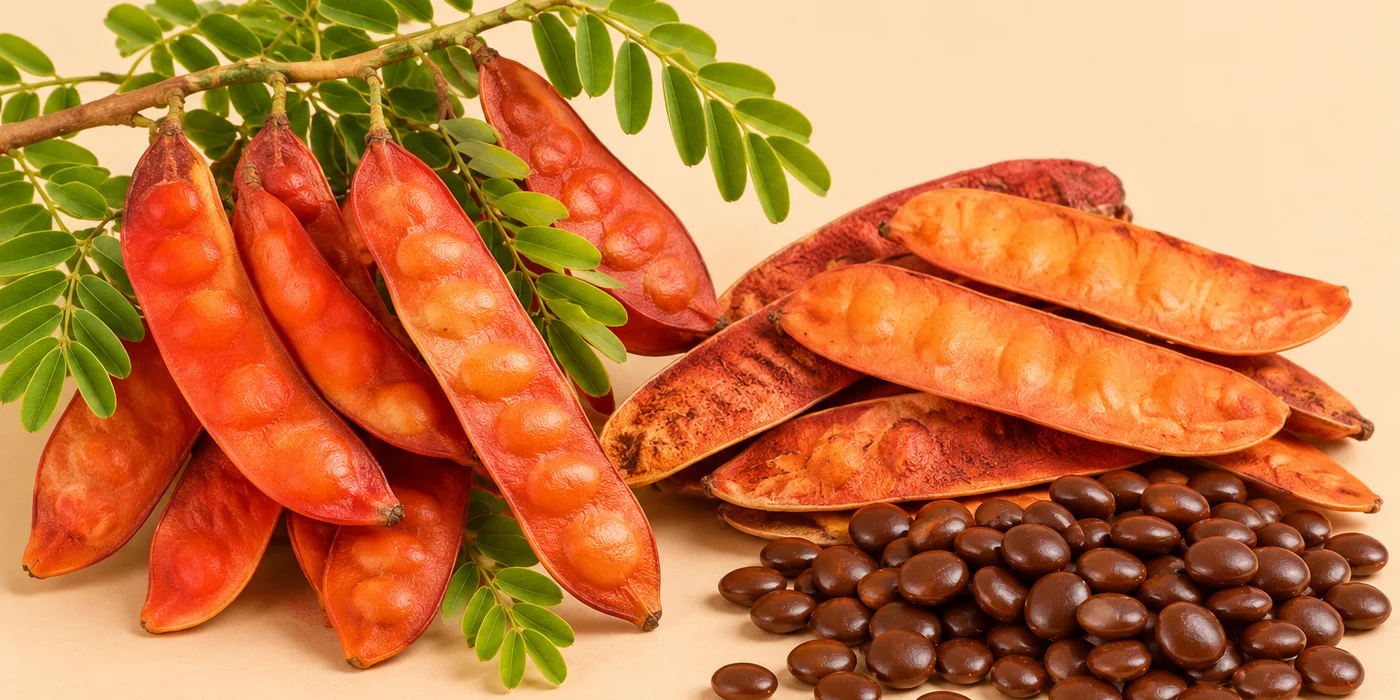
Legume native to the Andes, known as tara or taya. Its pods are an important source of tannins for leather tanning and gallic acid production, and its seeds contain a gum highly valued by the food and cosmetics industries.
Tara derived products
General information
- Scientific name
- Caesalpinia spinosa (Molina) Kuntze
- Common name
- Tara or taya
- Family
- Fabaceae (subfamily Caesalpinioideae)
- Origin
- Dry inter-Andean valleys of Peru, between 1,000 and 3,100 m above sea level
- World production
- Peru accounts for about 80 %
- Useful parts
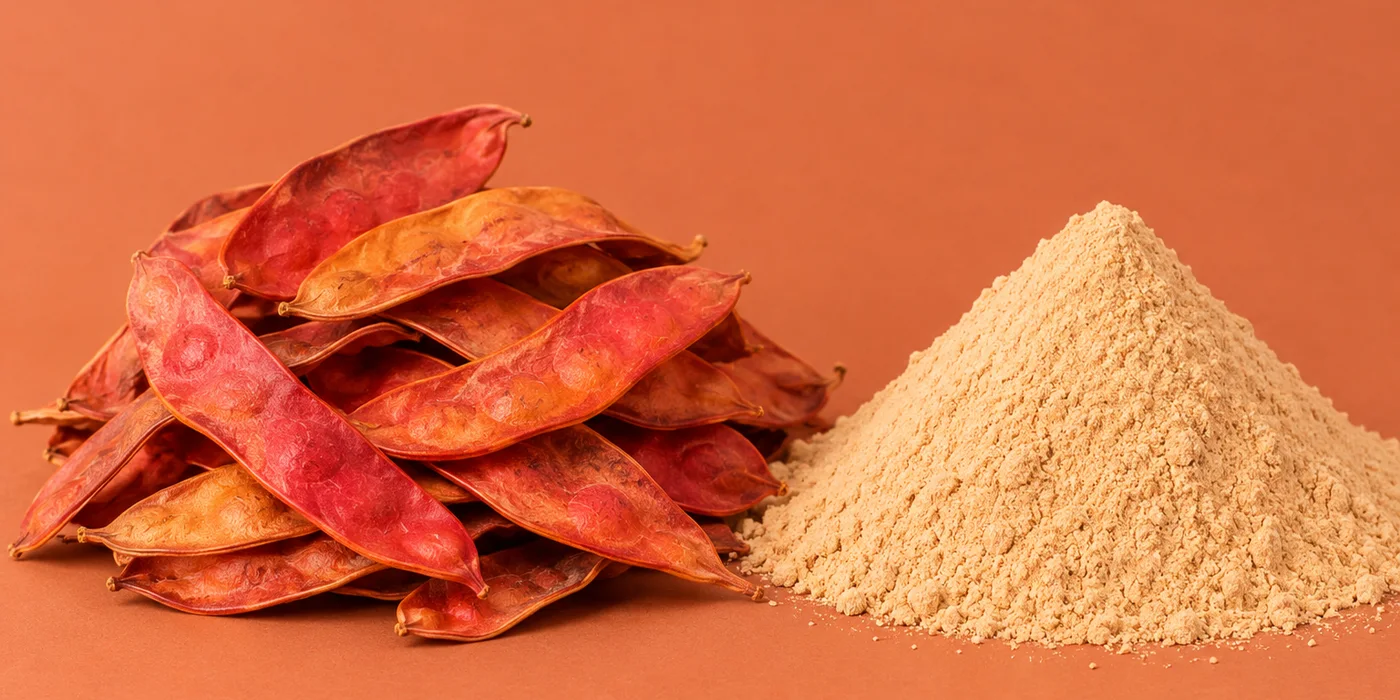
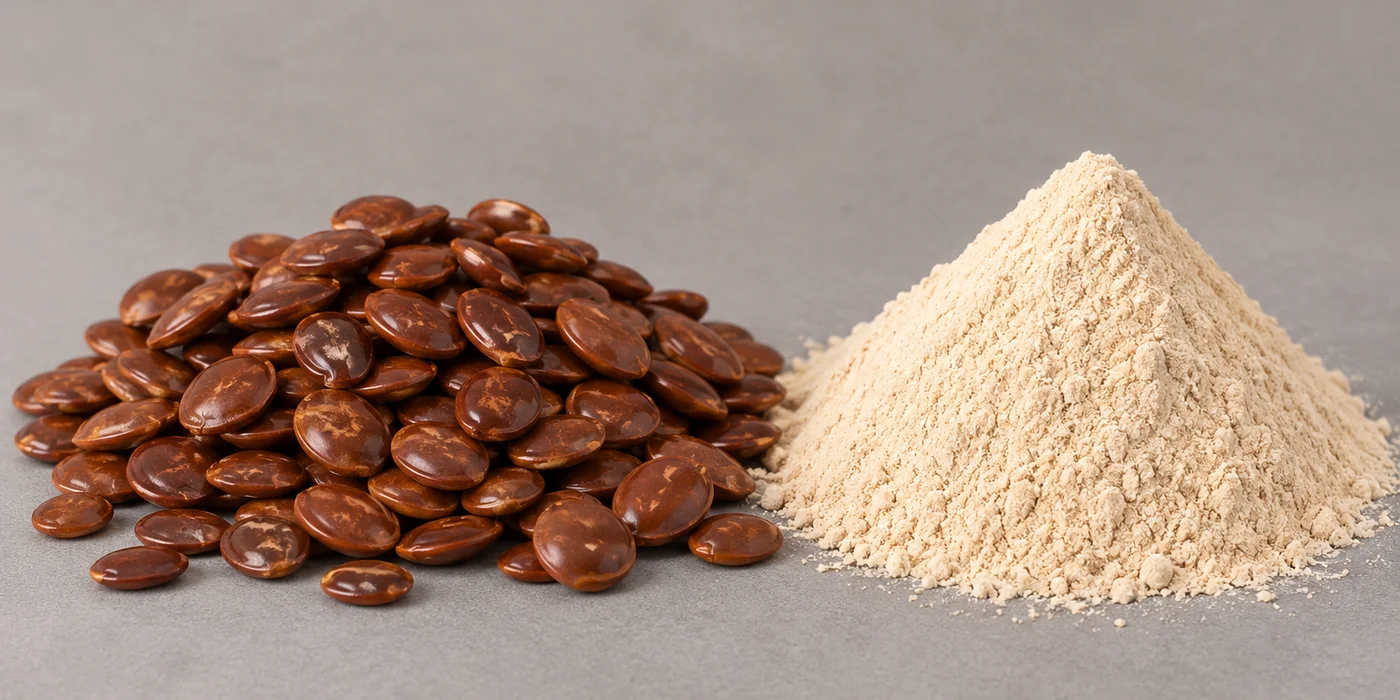
- Pod (tannins) and seed (gum)
Taxonomy
| Kingdom | Plantae |
|---|---|
| Class | Magnoliopsida |
| Order | Fabales |
| Family | Fabaceae |
| Genus | Caesalpinia |
| Species | Caesalpinia spinosa |
Botanical characteristics
| Size | Shrub or small tree, 3 to 5 m |
|---|---|
| Leaves | Compound, 8 to 12 cm |
| Flowers | Yellow and reddish, in clusters |
| Fruit | Flat reddish pod, 8 to 10 cm |
| Seeds | 4 to 7 per pod, dark brown |
Production in Peru
| Cajamarca | 41 % |
|---|---|
| Ayacucho | 16 % |
| La Libertad | 13 % |
| Huánuco | 13 % |
Uses of the pod
- Tanning: tannins for high-end leather.
- Chemical industry: raw material for gallic acid, pyrogallol and inks.
- Pharmaceutical and cosmetics industries: gallic acid as an input.
- Food industry: clarifier for wines and beers, and antioxidant for oils.
Uses of the seed
- Source of tara gum, natural food additive E 417.
- Thickener, stabilizer and gelling agent in foods.
- Additive for well-drilling muds.